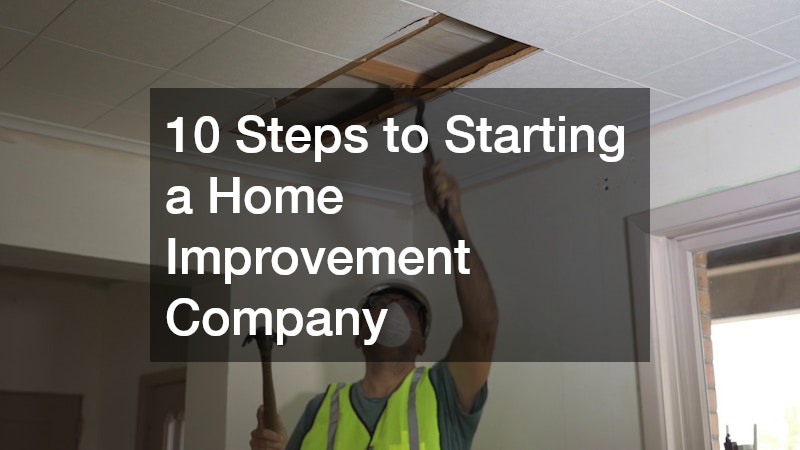
Starting a home improvement company can be a strong business opportunity, but it requires more than skill with tools and materials. Homeowners expect clear communication, reliable scheduling, safe workmanship, accurate estimates, and results that improve the value and function of their properties. A successful company needs a practical plan before the first project is sold.
The best approach is to build the business in stages. You need to define your services, understand legal requirements, organize finances, create dependable operations, and market the company with credibility. These 10 steps can help new business owners move from an idea to a structured company that is prepared to serve homeowners professionally.
It is also important to remember that growth in this field depends on trust. Customers are often inviting contractors into their homes, spending significant money, and expecting work that will last. A company that respects those concerns from the beginning is more likely to earn referrals, repeat business, and stronger reviews.
Step 1: Define Your Service Focus
Begin by deciding what kind of home improvement work your company will provide. A broad menu may sound appealing, but trying to offer every service immediately can create staffing, licensing, equipment, and quality-control problems. A focused service list helps you set expectations, train employees, buy the right tools, and describe your value clearly to customers.
For example, an HVAC company needs different technicians, vehicles, diagnostic tools, and licensing considerations than a general handyman business. Climate-control work also requires strong scheduling systems because customers often need help quickly during extreme heat or cold. If this is your chosen field, your business plan should account for service calls, maintenance agreements, replacement estimates, and emergency response procedures.
A startup that wants to compete as a local hardwood flooring service should build its plan around material knowledge, surface preparation, installation quality, and finish protection. Flooring customers often compare samples, durability, timelines, and cleanup expectations before choosing a contractor. By narrowing your early focus, you can create a smoother sales process and more consistent results.
Step 2: Research Licensing and Local Rules
Home improvement businesses must understand the laws that apply to their work. Requirements vary by location and may involve contractor registration, trade licenses, insurance, permits, tax accounts, and bonding. Before advertising services, check state, county, and city rules so the business can operate legally. This research also protects customers because regulated work often involves safety, property value, and code compliance.
Compliance also affects how professional your company appears during the sales process. Homeowners may ask for license numbers, proof of insurance, permit responsibilities, and written contracts before they approve work. Having those answers ready helps your company look prepared instead of improvised, especially when customers are comparing several estimates.
A plumbing company, for instance, may need licensed professionals because its work affects water lines, drainage, fixtures, and health-related systems. Even small errors can cause leaks, contamination risks, structural damage, or expensive repairs. Understanding licensing early helps you decide whether to hire credentialed workers, subcontract specialized work, or limit services until the company is fully qualified.
If your long-term vision includes roofing services, permitting and insurance should be reviewed carefully before any project begins. Roof work affects the building envelope and may involve structural concerns, weatherproofing, manufacturer specifications, and safety rules. Knowing the legal boundaries of the work can prevent compliance problems and help you write clearer proposals.
Step 3: Write a Practical Business Plan
A business plan does not need to be overly complex, but it should explain how the company will make money and control risk. Include your service categories, target customers, pricing method, startup costs, operating expenses, hiring needs, marketing strategy, and growth goals. This document becomes a guide for decisions rather than a formality that sits untouched.
New foundation contractors should pay special attention to risk planning because their work can affect structural stability, drainage, soil movement, and long-term property safety. A business serving this category needs strong inspection procedures, detailed documentation, and clear limits on what is included in each estimate. These details reduce misunderstandings and help customers understand the seriousness of the work.
For a residential roofer, a business plan should address labor availability, seasonal demand, material storage, weather delays, and safety training. Roofing schedules can change quickly when storms arrive or when high temperatures limit safe work hours. Planning for those variables helps the company protect crews while still serving customers efficiently.
Step 4: Build Your Budget and Pricing Model
New contractors sometimes underestimate how much it costs to operate a home improvement company. Tools, vehicles, fuel, software, insurance, payroll, materials, marketing, office support, disposal fees, and warranty work all affect profitability. Your pricing model should reflect true operating costs, not just labor hours and materials. Underpricing can create cash-flow problems even when the schedule is full.
If you plan to work like a deck and patio builder, your budget should account for lumber, composite products, fasteners, railings, concrete, equipment rental, weather delays, and site cleanup. Outdoor work can involve uneven terrain, drainage concerns, and customer expectations about appearance. Building those variables into estimates helps protect your margins.
Companies that install a glass door system need to think carefully about measurement accuracy, hardware selection, delivery coordination, and breakage risk. Large glass products may require special handling, multiple installers, and precise site preparation. Pricing should account for those realities so each project remains profitable without surprising the customer later.
Step 5: Create Vendor and Subcontractor Relationships
Reliable suppliers and subcontractors can make a major difference in how smoothly your company operates. Good vendor relationships help you get accurate product information, dependable delivery timelines, and better support when materials are delayed or damaged. Subcontractor relationships matter when a project requires skills your core team does not provide. Clear agreements prevent confusion over scope, payment, scheduling, and responsibility.
Written agreements are especially helpful when several parties contribute to the same project. They can define who orders materials, who communicates with the homeowner, who handles cleanup, and how delays are reported. These details may feel administrative, but they prevent conflict when schedules become tight or site conditions change.
A strong supplier network matters for bathroom remodelers because these projects often involve tile, vanities, fixtures, lighting, ventilation, waterproofing materials, and cabinetry. Delays in one product can disrupt several trades at once. Building dependable vendor relationships helps keep projects organized and gives customers more confidence in the timeline.
Reliable window contractors also depend on accurate ordering, product availability, and careful coordination. A wrong size, delayed shipment, or missing component can leave a home exposed or force a project to be rescheduled. By developing consistent ordering processes and supplier contacts, a new company can reduce mistakes that damage trust.
Step 6: Develop Standard Operating Procedures
Standard operating procedures help a growing company deliver consistent service. These procedures can cover estimate requests, customer intake, site inspections, proposals, contracts, deposits, change orders, jobsite protection, cleanup, quality checks, and follow-up communication. Written processes make it easier to train employees and hold everyone to the same expectations.
An HVAC company should have clear procedures for diagnostic visits, equipment recommendations, maintenance scheduling, warranty documentation, and customer education. Without a consistent process, two technicians may explain the same problem in completely different ways. Standardization helps customers feel informed and helps the company avoid missed details.
A plumbing company should also establish response procedures for urgent calls, water shutoff guidance, fixture replacements, drain concerns, and documentation of hidden conditions. Plumbing issues often create stress because customers worry about water damage. Calm communication and organized procedures can turn a difficult call into a professional service experience.
Step 7: Build a Brand Customers Can Trust
Branding is more than a logo. It includes the company name, message, website, uniforms, vehicles, proposal style, phone etiquette, photos, reviews, and the tone used in customer communication. A trustworthy brand should make homeowners feel that the company is organized, competent, and respectful of their property.
A local hardwood flooring service can strengthen its brand with project photos, finish samples, maintenance guidance, and clear explanations of installation timelines. Customers want to know how long the work will take, how rooms will be protected, and how the finished floor should be cared for. Helpful information can set the company apart from competitors that only provide a price.
For roofing services, proof of reliability is especially important because homeowners may be anxious about leaks, storm damage, or major replacement costs. Before-and-after photos, inspection notes, warranty explanations, and clear cleanup standards can help customers understand the value of the work. A brand built on clarity can reduce hesitation during the sales process.
Step 8: Prioritize Safety and Insurance
Safety should be built into the company before the first crew is sent to a jobsite. Home improvement work can involve ladders, power tools, electrical hazards, heavy materials, dust, sharp edges, and customer property risks. Written safety rules, training, protective equipment, and jobsite checklists help prevent injuries and damage. Insurance should also be reviewed with a qualified professional.
Experienced foundation contractors may face hazards related to excavation, confined spaces, heavy equipment, unstable soil, and structural movement. Because the work can affect the integrity of the home, insurance limits and documentation practices should match the risk involved. Careful planning protects the business as well as the customer.
A residential roofer needs a safety program that addresses fall protection, ladder use, weather conditions, debris control, and crew communication. Roofing injuries can be severe, so safety cannot be treated as a formality. A company that invests in safe practices is better positioned to keep workers protected and projects on schedule.
Step 9: Create a Marketing and Lead System
Marketing should connect your services with the customers most likely to need them. A strong lead system may include a professional website, search visibility, local listings, reviews, referral partnerships, yard signs, social media, direct mail, and follow-up emails. The goal is not just to generate attention, but to turn the right inquiries into profitable projects.
New window contractors can benefit from marketing that explains energy efficiency, drafts, condensation, frame damage, noise reduction, and style options. Customers may not search for replacement until a problem becomes obvious, so educational content can help them recognize when to act. A clear website page for each service can also improve the quality of incoming leads.
Marketing a glass door system requires strong visuals because customers often want to see how the product will change a room, storefront, patio entrance, or interior space. High-quality photos, product descriptions, and design explanations can make the service easier to understand. Visual proof is especially valuable when the investment affects both function and appearance.
Step 10: Plan for Growth Without Losing Quality
Growth should be intentional. Many new home improvement companies get into trouble by accepting too many projects before they have enough trained employees, vehicles, supervisors, or administrative systems. Expanding slowly can be healthier than rushing into every opportunity. Track close rates, average job size, profit margins, customer feedback, and callbacks before adding services or territories.
Regular performance reviews can help you decide when expansion makes sense. Look at which jobs are most profitable, which crews need support, which services create callbacks, and which customer questions keep repeating. Growth should be based on evidence, not only on a busy calendar or the desire to look larger.
Many bathroom remodelers need careful growth planning because these projects involve several trades, tight spaces, customer disruption, and detailed finish selections. Adding too many remodels at once can overwhelm scheduling and communication. A company should prove it can manage quality at one volume level before expanding to the next.
A deck and patio builder may grow by adding design consultations, seasonal maintenance, lighting coordination, or outdoor living upgrades. Each expansion should fit the company’s existing skills and customer demand. Growth works best when new services strengthen the business rather than stretching crews beyond their capabilities.
Starting a home improvement company requires planning, discipline, and a clear understanding of how construction work affects customers’ homes. The strongest businesses do more than complete projects. They communicate well, protect properties, manage risk, document expectations, and build systems that allow consistent service from the first call through final cleanup.
By defining your focus, following local rules, building a realistic budget, creating procedures, and investing in safety and marketing, you can create a company with a stronger foundation for long-term success. The home improvement field offers many opportunities, but the companies that last are usually the ones that combine skilled workmanship with organized business practices.